


What makes someone willing to burn their life down for the truth?
Not the performative truth-telling that gets you book deals and TED Talks. The kind that gets you erased. Or cursed by people who, even when proven wrong later, will never forgive you for trespassing on their version of safe reality.
What’s in their childhood, their wiring, their background that makes them constitutionally incapable of looking away?
Edward Snowden was raised by a Coast Guard father, surrounded by a service-and-duty narrative, but also by libertarian distrust of government overreach. A duality that shaped his later choices, possibly?
Chelsea Manning grew up queer in rural Oklahoma, beaten by her alcoholic father. Ignored by an alcoholic mother. Bullied at home, at school, at church. Maybe she glimpsed power in the wrong hands before the Army taught her how that power operates globally.
Daniel Ellsberg was raised during the Great Depression, the son of a bridge builder. At fifteen, his father fell asleep at the wheel. His mother and sister died in the crash. Daniel spent thirty-six hours in a coma. He went to Harvard, to the RAND Corporation, to the Pentagon—specializing in nuclear war planning, in how to preserve civilization after the first strike. Then he read the Pentagon Papers and realized his father was asleep at the wheel again, this time at the scale of nations.
Jeffrey Wigand, who exposed the tobacco industry, came from a working-class family. Earned a PhD in biochemistry. Worked his way up the corporate ladder only to find poison at the top. His mother raised him “by the book, not the heart.” His father, a mechanical engineer, praised independence. The corporation he worked for followed the book—and killed people in the process.
So. Upbringing seems to be one important ingredient. Opposing views between parents. A religious or ethical duality that forces evaluation of one’s stance in the universe.
Is that it?
Not always.
Karen Silkwood came from a Texan oil-refinery town, a well-off family, nothing extraordinary. She was ordinary. She drank, smoked weed, raced her Honda Civic, drank Dr Pepper. After leaving her husband and children, she took a job as a metallurgical technician, polishing nuclear fuel rods before she even knew what they were. It began as a glimpse into safety violations at the Kerr-McGee plutonium plant. Slowly, something in her woke up. She testified before the Atomic Energy Commission. She put all the proof into a fat manila envelope. She was on her way to meet a New York Times reporter when her car crashed. The manila envelope was never found.
Snowden, Manning, Wigand are still alive. Ellsberg died of natural causes. Yet they were all destroyed in a manner that made them famous. Reputations shredded. Careers gone. Replaced by book or movie deals, or at least cocktail-lounge fame. The One Who Dared, immortalized.
What about the rest? The 99.99999 percent who we never hear about. The people turned into ghosts, whether dead or alive, for making the ultimate sacrifice.
The Irish Ghost Known as Francis Boyle
Take Francis Boyle. Have you heard of him?
I first confused his name with Francis Crick, one of the discoverers of the DNA helix. Wrong century, wrong profession. The Francis I’m talking about seemed ordinary—a professor teaching international law at the University of Illinois.
According to pharmaceutical-industry whistleblower Sasha Latypova, Boyle had agreed to be the sixth witness in a Dutch court case against Bill Gates and Pfizer CEO Albert Bourla. The suit alleged the COVID vaccines were bioweapons.
He died suddenly on January 30, 2025, three weeks before his scheduled testimony. Maybe a heart attack. The University of Illinois never disclosed the official cause. No one asked—or cared—because he was already a ghost by then.
Francis was born March 25, 1950, into South Side Irish Catholic Chicago. A tribal enclave where grandparents and great-grandparents still carried stories of British-engineered famine, land stolen under legal frameworks designed to legitimize theft, truth-tellers hanged, exiled, erased from official records.
He refused to call himself “American.” He was Irish—an identity forged in opposition to empire. His distrust of authority was common sense, not rebellion. Speaking truth to power wasn’t heroic. It was baseline human decency.
Boyle went straight into the belly of the beast with that ideology. Harvard Law School. Graduated magna cum laude in 1976. Then a Harvard PhD in political science.
He learned how power operates by sitting in the same classrooms as the people who would operate it. He studied international law not as abstract theory but as the language empires use to legitimize conquest.
He got his credentials stamped and certified by the most elite institutions in America. Then he weaponized those credentials against the very system that granted them.
Most people with Harvard degrees spend their lives seeking approval from Harvard and its ecosystem. Boyle spent his seeking every fight Harvard would never touch.
His client list: Bosnia-Herzegovina during the genocide. The Palestinian Authority. The Blackfoot Nation. Indigenous tribes fighting for sovereignty. The Provisional Government of Tamil Eelam after the Sri Lankan Civil War. Native Hawaiians seeking restoration of independence.
Not the cases that get you profiled in The New Yorker. The ones that get you quietly blacklisted.
The pattern matches. First, childhood exposure to duality. An outsider’s perspective against an ingrained, normative society.
Then, by design or coincidence, insider access to a corrupt system. A collision with reality. All is not well here.
Exiting the Belly of the Beast
In 1989, Boyle drafts the Biological Weapons Anti-Terrorism Act.
It is supposed to be the legal firewall—the thing that prevents the U.S. from building the bioweapons programs it claims to oppose. Both houses of Congress pass it unanimously. President George H. W. Bush signs it into law.
Boyle watches what happens next.
BSL-4 labs begin appearing on college campuses. Fort Detrick. The University of North Carolina at Chapel Hill. Galveston. Boston University. Gain-of-function research making viruses more lethal, more transmissible, all labeled “defensive research” and “vaccine development” on grant applications.
His own legislation—the law he wrote to prevent this exact scenario—gets bypassed through semantic games.
The collision is complete: he built a firewall and they built the fire anyway, right in front of him, using language to make it legal.
Most people in Boyle’s position would compartmentalize. Tell themselves the research is legitimate. Trust the experts. Focus on tenure and reputation.
Boyle couldn’t.
He started talking. Writing. Testifying wherever anyone would listen.
He pointed to specific programs, specific labs, specific budget line items. Called the BSL-4 expansion what he believed it to be: offensive bioweapons work disguised as defensive research, violating the spirit and letter of international law.
The response was deafening silence from colleagues. Erasure from mainstream venues. Wikipedia edits emphasizing “controversial views.”
He became radioactive to the establishment.
January 2020: The Unforgivable Prophecy
While COVID-19 was still a regional story—Wuhan, lockdowns, videos of people collapsing—Boyle went on record.
Lab leak. Engineered pathogen. Wuhan Institute of Virology. NIH-funded gain-of-function research that made coronaviruses more transmissible. Not natural zoonotic spillover.
He was specific. Cited research programs. Named scientists. Pointed to funding trails.
Then he went further. He called the mRNA vaccines “bioweapons.” “Frankenshots.” He filed affidavits stating they met the legal definition of weapons of mass destruction under the very Act he wrote in 1989.
The media response: conspiracy theorist. YouTube videos scrubbed. Academic colleagues silent. Boilerplate erasure.
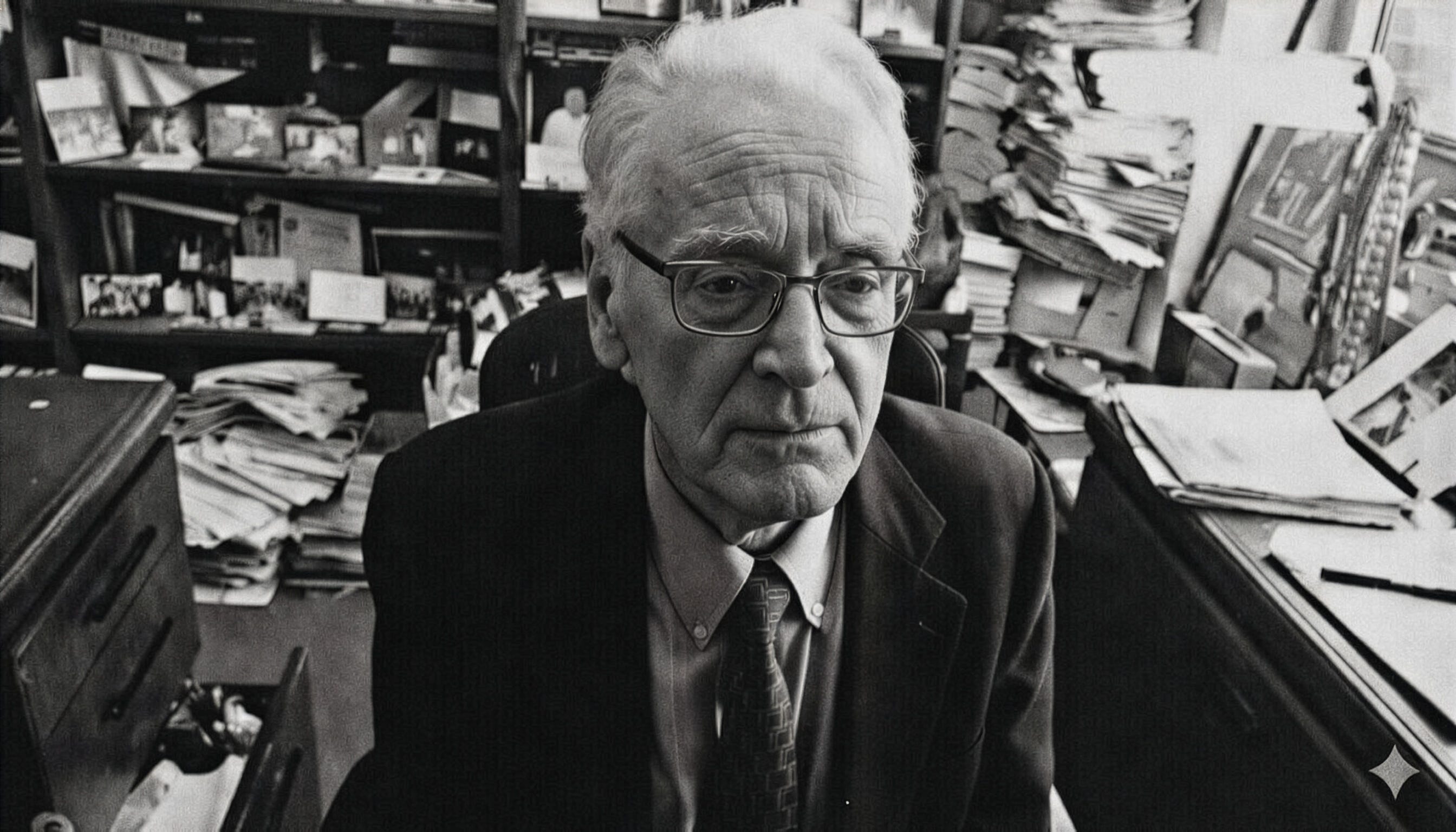
I watch interviews he did in early 2020. Boyle sits in what looks like a home office, bookshelves crammed behind him, papers stacked on the desk within arm’s reach. He’s wearing a rumpled button-down, no tie. His hands move when he talks—not wild gestures, just the small motions of someone who has explained this a hundred times and will explain it a hundred more.
He looks tired but certain. Not frantic. Not speculating.
Reporting.
Three years later—2023—the Department of Energy acknowledges a lab leak is likely. The FBI does the same. Even Fauci starts hedging in Senate testimony.
Does Boyle get vindicated? Invited on CNN to say, “I told you so”?
No.
He keeps teaching constitutional law at the University of Illinois. Keeps doing interviews with independent media. Keeps talking to audiences of twelve people and a chatbot.
Still erased. Still not in the room when the truth he spoke gets quietly acknowledged.
Immune To Shame
Boyle paid the price without the glitter. No book deals. No exile that makes him a cause célèbre. No prison sentence that rallies activists. Just decades of being right while being ignored, speaking truth while being erased, maintaining integrity while watching his career ceiling sink into the basement.
Colleagues who wrote tributes after his death noted something that made people uncomfortable: Boyle had an ego. He spoke bluntly. Sometimes insultingly.
One friend explained it this way: if you knew his parents, if you knew South Side Irish culture, you’d understand. The Irish don’t apologize for being right. They don’t soften their edges to make power comfortable.
That cultural inheritance—refusal to grovel—is part of the secret sauce.
Maybe integrity at this level requires more than courage. It requires being willing to be called arrogant, difficult, paranoid, conspiracy-minded—knowing those labels are the price institutions charge for being right.
His death failed to vindicate him. His obituary never mentioned his real accomplishments. That he spoke out. That he was right—about the greatest crime against humanity on record.
Maybe that’s the secret ingredient. Not caring about the attention. Following your true wiring, even when you’re a ghost.
Immune to shame.
I am so very glad you brought up Francis Boyle. I remember his videos warning about the bioweapon shots. I also deeply admired him for what he did.
Earlier today i read a posting from Unbekoming trying to make reasoning of why people believe what they are doing is correct, because they have a lifestyle that puts their interests first.
https://unbekoming.substack.com/p/mortgages-create-beliefs?utm_source=post-email-title&publication_id=355417&post_id=187254058&utm_campaign=email-post-title&isFreemail=true&r=x0z8&triedRedirect=true&utm_medium=email
My response when restacking this was;
"Good explanation, and puts SOME things into prospective, BUT I know and have known many, many people who have lost much because of their moral beliefs that will not allow them to believe anything less than what is humanity protection.
This made my heart hurt & sickened me to my stomach. Maybe Unbekoming should delve into what makes a person un-shakable even when they stand to lose everything on this pithy world. This world isn’t worth losing your soul."
I would love to know what makes some people stand up--speak out at all cost, just because it IS THE RIGHT THING to do. I know there are more people out there that would do as Francis Boyle.
But, I also know it is not common.
This is a great tribute to him and I wish there were more like him.
Thank you.
This is a gripping essay, and the question you’re asking is the right one: what makes a person willing to accept social death for the sake of truth?
From a physician-scientist lens, I think the “secret ingredient” you land on maps onto something we study in a different vocabulary: low dependence on external reward, high internal locus of duty, and an unusually strong tolerance for being misunderstood. In research and medicine, the cost of dissent is often not prison; it’s slower and quieter: grant doors closing, invitations drying up, colleagues going silent. Your piece captures that “erased while living” phenomenon vividly. 
One nuance I’d add (especially because this topic can slide into certainty theater): moral courage is necessary, but it isn’t sufficient. The only kind of truth that protects people at scale is auditable truth; claims that can survive hostile review, transparent methods, and replication. In other words, the whistleblower ethos is at its strongest when it’s paired with rigor: documents, data, chain-of-custody, and an argument that remains stable even when our preferred narrative isn’t. 
Still, I’m grateful you’re pulling attention back to the psychological/spiritual cost of integrity. Our institutions often reward “safe consensus” more reliably than they reward uncomfortable accuracy. And the people who keep speaking anyway without the glamour are a kind of infrastructure we rarely honor until it’s too late.