


Fasting is the most powerful tool on the roster for clearing the gunk and resetting the body for healing. The price? Nothing. Yet doctors and health practitioners barely mention it.
There’s no billing code for an empty plate. No molecule to sell. No mushroom powder. No beeping gadget. Little profit, little incentive to recommend it. That leaves you with a judgement call—one that requires your own thinking, too.
Here’s what you might not know. Add sunlight and the right preparation, and fasting gets a turbo boost with far less struggle. Stronger effects. A dramatically easier ride. The three-day battle becomes a walk in the park.
What happens when you stop eating
Around twelve hours, the liver runs out of stored sugar. Ketones—the fuel your liver makes from fat—climb, and by twenty-four hours the brain has switched over to the jet-fuel equivalent of brain nutrition. Insulin drops through the floor and stays there. Growth hormone goes up several-fold, which is solid human data going back to 1988.
By the second or third day, the stored sugar is gone and your body has started protecting its own muscle instead of burning it.
All of that has been measured in people, and it is remarkable enough on its own.
The deep-clean story you have seen on the infographics, the one with AUTOPHAGY PEAKS printed at hour seventy-two, is borrowed from yeast and mice. Nobody has measured it properly in a living human. But it doesn’t matter, because you will feel the difference through every sense your body has: a superior new state of being, alertness, clarity, and life force.
Getting there, however, takes serious work… unless you stumble on a few secrets, as I did accidentally in Costa Rica.
The challenge is hour thirty
Everyone can do sixteen hours. Three days is a different animal, and hour thirty is where the beast lives. Your body stops asking politely for something to nibble and hardens the negotiation until, at eleven at night, with the kitchen light off and nobody watching, it will build you a case with exhibits for why a bowl of rice is a clinical necessity.
Most people lose that argument once and never try again.
I lost it for years. Three days, then five, then seven, and every one of them fought me the whole way. I assumed the fighting was the fee.
Then I spent a season on the Pacific coast of Costa Rica for reasons that had nothing to do with fasting, and the fee stopped being charged.
I was outside from first light, which was not discipline. It was where the day was happening. Light at five. Warm by six. Howler monkeys doing the job the alarm clock used to hold.
I started going down to the rocks before the heat came up and lying on the stone with nothing on, which I mention because the amount of skin turns out to matter more than anything else in this.
Hour thirty came and went, and I noticed it roughly a day late.
By the end of that season, two and three days without food had stopped registering as an event. No war. No counting down.
What turned up instead was clarity, the kind that arrives on the second morning and keeps getting cleaner, until you look up from work you have been doing well for hours and realise it is dusk, you have not eaten since the day before, and you had not once thought about it.
I was changing several things at once, in addition to the sunlight exposure. More fat than I had ever eaten in Europe. Far more salt in my water than looked sensible. Sweating through most of the daylight. Any one of those could be a partial answer. But I believe the sun is the key component, the Philosopher’s Stone, in this process.
I have run the experiment many times since, in greyer countries and once through a Baltic February, and the pattern holds well enough that I now build every long fast around it.
The gauge nobody reads
Ask a man or a woman how they first noticed their energy declining, and they’ll tell you about getting winded on the stairs, crashing in the afternoons, struggling with stress, or dreading Mondays. But they’re describing the second thing they noticed.
The first was that they stopped wanting sex.
Carnal desire is the first thing the body stops paying for, long before anything shows up in a blood test. Procreation takes a back seat when the body has to focus on survival. Almost nobody says it out loud because saying it feels like an admission about a marriage or a relationship rather than a reading from an instrument. So it gets handled on its own. A conversation, a pill, a private worry carried for years.
Almost nobody reads desire as the gauge, which is exactly what it is. With life force comes a healthy appetite for a roll in the hay.
And not just for sex. For appetite in general. For life. For pursuit. For creating. For taking risks. For pushing the envelope. Wanting is what a body does once it has energy to spare instead of rationing it—the type of wanting that translates into directed purpose and drive.
One plus one makes three
I’m not a doctor or a scientist, but I believe that when we combine fasting with proper sun exposure, the effect is more than 1 + 1 = 2. It’s alchemy. 1 + 1 = 3.
You get something larger than the sum, and the fast stops costing what it used to cost.
I cannot prove it. Nobody has run that trial, and nobody is going to, because there is no product to be sold waiting at the end of it. But you can experience it for yourself.
Here is my theory. Light and food are the two inputs that set your body clock. Morning light sets the clock in the brain. The timing of your meals sets the clocks in the liver, the gut and the fat. Run those two in agreement and every organ knows what time it is.
Run them in contradiction, eating at ten at night under bright bulbs and seeing no real daylight until Thursday, and the brain thinks it is dawn while the liver thinks it is midnight.
The research on eating windows keeps landing on the same awkward finding: the same food, eaten across the same number of hours, produces different results depending on whether those hours sit in daylight or after dark.
Then there are the effects of the fast and the effects of the sun that amplify each other. Put them side by side.
What the fast does, measured in people
Insulin drops through the floor and stays down
The brain switches fuel from sugar to ketones
Growth hormone secretion rises several-fold across two to five days
Blood pressure falls
The body stops burning muscle and starts sparing it
Hunger stops climbing after the first day or two and drifts downward
What autophagy does (measured in mice and yeast, at least)
Worn-out mitochondria get broken down and replaced with new ones
Misfolded and clumped proteins get dismantled before they accumulate
Fat stored inside the cell gets pulled out and burned
Bacteria and viruses hiding inside cells get cleared
Blood stem cells renew and the immune system rebuilds itself
What the sun does (measured in people)
Ultraviolet A releases nitric oxide from the skin, opens the blood vessels and drops blood pressure by around five points
Ultraviolet B makes vitamin D
Ultraviolet B also releases beta-endorphin and alpha-MSH in the skin, one an opioid and the other an appetite signal
Morning light raises the cortisol pulse that starts your day and pulls the whole clock earlier
Darkness after dusk lets melatonin run, which is when the repair happens
Three of those pairs are the same lever pulled from two ends. Both halves drop blood pressure. Both halves act on the same body clock, one through the eyes and one through the plate. And both halves put a hand on appetite, the fast by flattening the hunger signal and the sun by releasing its own.
Which is why I stopped treating the fast and the sun as two separate projects and started running them as one.
The protocol, in order
Food and light, run together, in this sequence. The order is the whole thing. I have skipped steps and been punished for it every time.
1. Cut the carbs first
To get your body using fat for fuel faster, cut all carbs at the beginning, including fruit. Soda, juice, syrups, sweetened coffee, cereal, bread—the lot. Once you’ve adapted, bring fruit back in.
Or keep the fruit and give your body longer to adjust to using fat. Your call.
Give yourself two to four weeks before attempting anything ambitious, or longer if you keep the fruit. Fat-adaptation is what changes hunger from an emergency into a passing condition.
2. Move the fat up
Butter, ghee, tallow, olive oil, coconut, fatty fish, and the cuts your supermarket has been trimming off since a committee in 1980 decided fat was the enemy. They were deadly wrong. Fat is the highest information nutrient out there, as long as we eat the right ones. Expect a discomfort while you transition, one or two grey weeks while you switch over. It passes.
Eliminate seed oils. Sunflower, soy, corn, canola. They are oxidation-prone and heavily processed, and cutting them changed how I felt. Your call, not mine.
3. Salt the water
Not optional, and almost nobody does it. When insulin drops, your kidneys start dumping salt, something like twenty grams over a few days, and a comparable amount of potassium in the first week. The headache, shakes, and grey exhaustion everybody blames on fasting are usually low salt, and people mistake one for the other.
Real salt in the first glass of the day, potassium from avocado and greens, magnesium from food or a capsule.
The kilo or two a day you drop at the start is salt and water leaving rather than fat. Knowing that in advance saves disappointment later.
4. Take the first hour outside, before the phone
Eyes open, no sunglasses, ten minutes minimum—the longer the better—under whatever sky you were issued. Bright light in that first hour lifts your morning cortisol pulse by a third or more. The same light in the afternoon does nothing. Cheapest move in the protocol and the one nearly nobody makes.
5. Build the solar callus, and use all of it
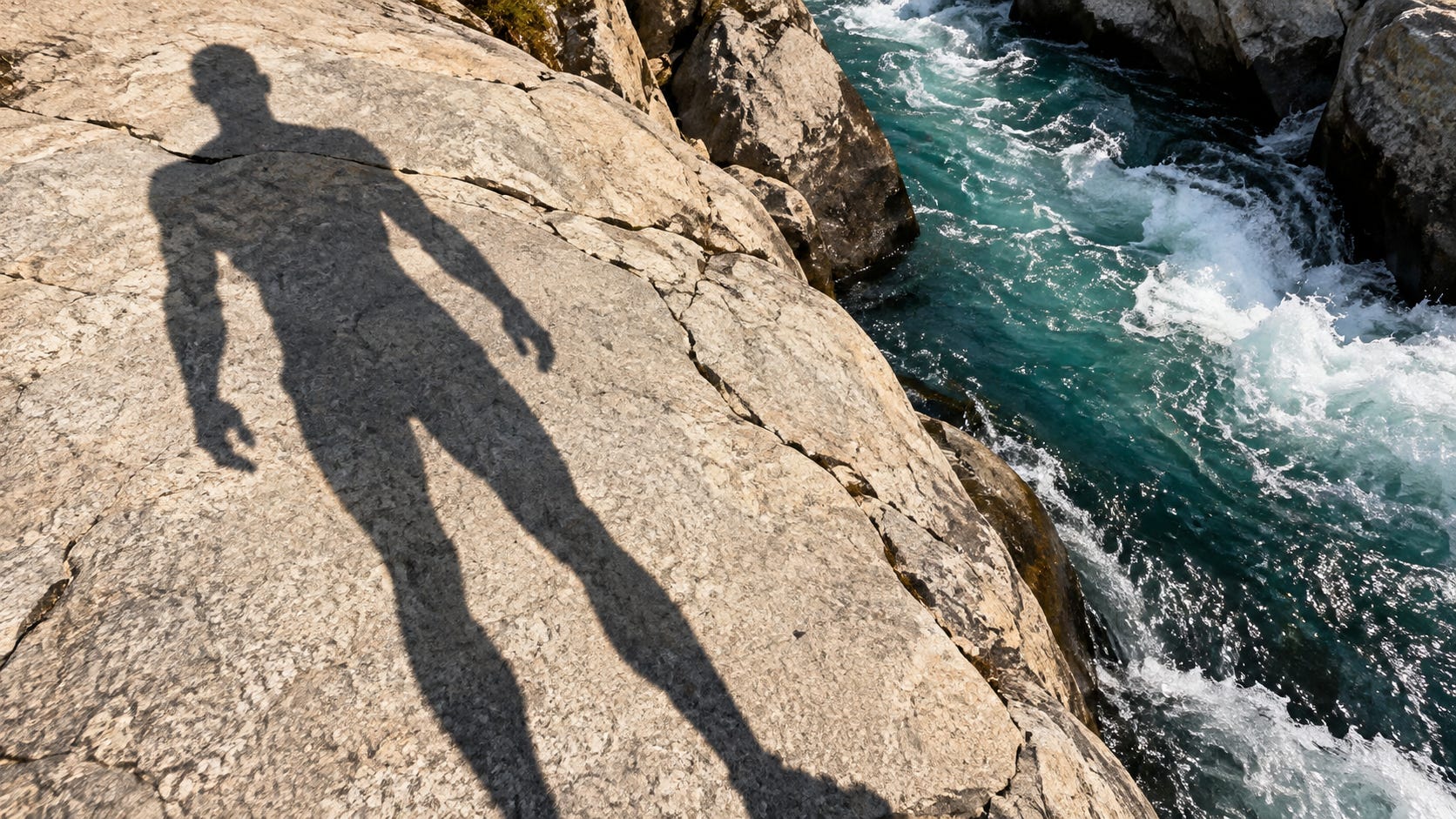
Bare skin in the morning or the late afternoon, while the light is soft and your shadow is longer than you are tall. Five minutes, then shade, then a few minutes added every day—making sure you don’t reach burn point—until you can do at least an hour a day.
No suncreams, no blocks, no endocrine disruptors or fancy brands plastered on your greatest and most magnificent organ. When you up the intake gradually, carefully, you dramatically increase your burn threshold. At some point you can stand under the midday sun and get no burn at all. That’s when you’re on your way.
Your body builds the callus on its own as soon as you give it a reason to.
The part everyone gets wrong is how much skin. A face and two hands are less than a tenth of you, and that tenth has been your entire dose for the majority of your life. Shoulders, back, chest, stomach, legs, and the parts that have been in the dark since childhood, which need the smallest dose and the most patience.
As much as the weather and the neighbours will tolerate.
The Greeks were not being provocative when their athletes trained naked. The word gymnasium comes from gymnos, which means naked. They were being efficient.
Never burn. A burn is an injury, not a dose.
6. Cut the synthetic lights
Ordinary room light in the evening delays melatonin in ninety-nine people out of a hundred and cuts the window by about ninety minutes. So kill the overhead bulbs after dusk and use low lamps at table height. Warm your screens. Catch the sunset when you can. Candles are fine. A fire is fine. What you are avoiding is bright light at eye level, not light. Dimming beats filtering.
7. Lengthen the fast gradually
Sixteen hours, then eighteen, then a single day. Do not go looking for three days until one day has become boring. Break every fast on protein and fat, never on sugar. Break a long one gently, because the danger in extended fasting sits in the refeeding rather than in the fast itself.
Celebrate with a ritual
By the time you finish the three-day fast, you’re a new being. Savor it. Stay rooted. Don’t go back to the old habits. Continue your relationship with the sun and a low-carb, no-junk diet. This way the advantages become permanent.
Celebrate your accomplishment. Prepare your first meal as a ritual. Cook it yourself. Give the occasion proper time. Start marinating the day before. Find the quality stuff. Good meat from animals that stood in actual grass, heart and liver as often as steak. Garlic and salt and whatever was growing outside the door.
When I did this, the smell built through the afternoon and, instead of tormenting me, became part of the fast.
Chew slowly to find the layers of spectra in the food. If it’s high-information food, your new body can sense them like a pure electric rush flowing through your body.
You will discover taste buds from another dimension. A new you, tasting a new world.
Caveat
Multi-day fasting is off the table if you are pregnant or nursing, have any history of an eating disorder, are underweight, or have uncontrolled thyroid, liver or kidney disease. It needs real supervision if you have Type 1 diabetes, unstable heart disease, or take anything a doctor adjusts by the milligram, because a long fast changes the dose you need.
The sun half is not yours to improvise if you have had a melanoma, have a family history of one, or take a drug that makes you photosensitive.
Sixteen hours is for nearly everybody. Seven days is not. I am not a doctor, and this is not medical advice.
The Clip
I’ve compiled a 15-minute clip on sun fasting, if you prefer to listen.
Before you go
I believe the most powerful way to fix what’s going sideways in our body, mind, field, or spirit is to address the fundamentals of how we live. Instead, we’re being sold pills and protocols designed to keep us dependent on external solutions.
That belief is what led me to build Energeia.now, where I’ve brought together protocols from the best natural practitioners who share this approach. A short questionnaire helps you find the most relevant place to start.
The project is still evolving. Try it on for size, and let me know how it works for you.
You can start with the four-minute reading.
How much salt should I add to my water?