


Overdue for some good news? Here it comes. But first, exhale. Do a long one. Slowly. And then yet again. Through your nose.
The molecule that comes out every four seconds or so — unless you’re having a panic attack, in which case it could be every second — is the most precious substance on Earth. More precious than oxygen.
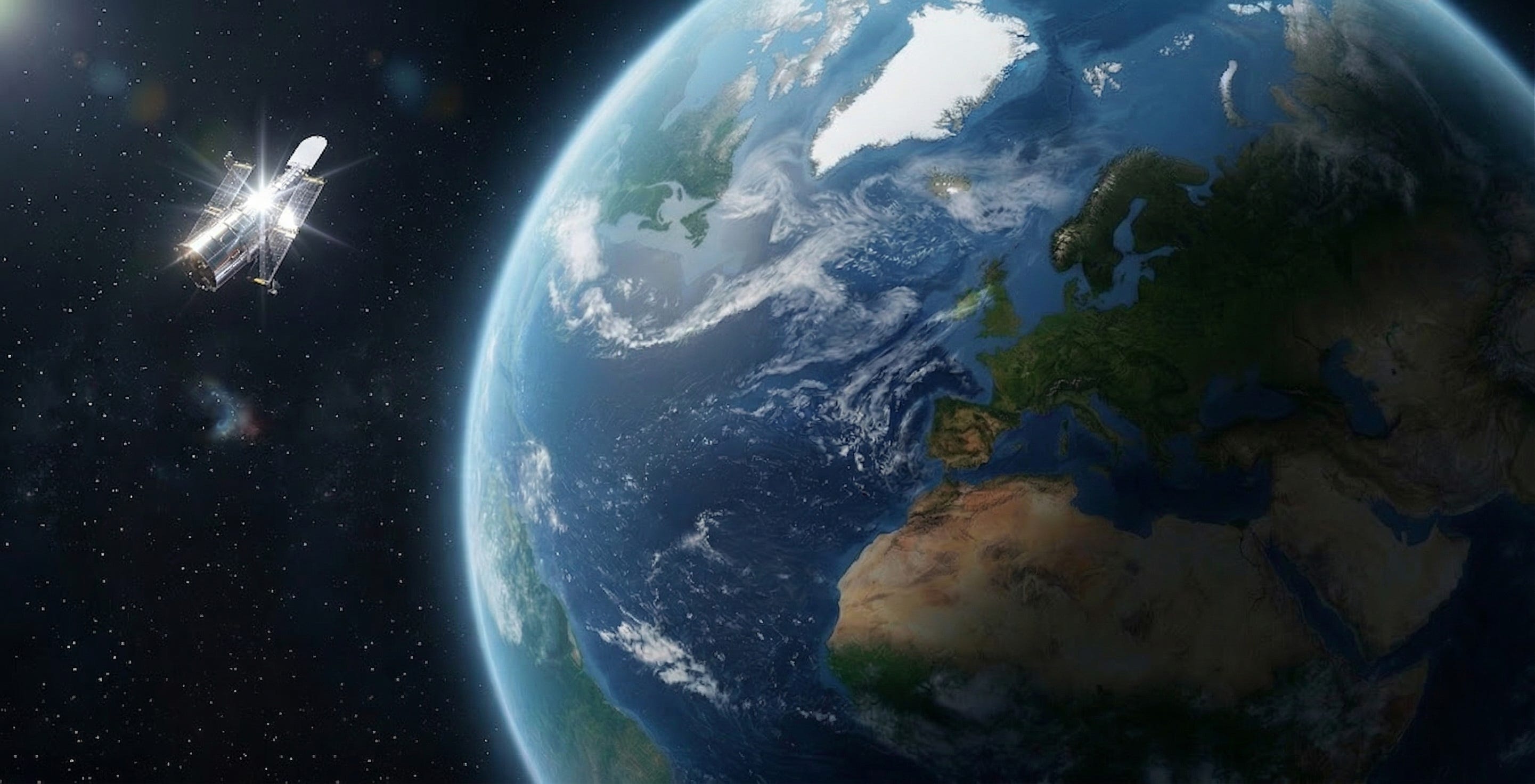
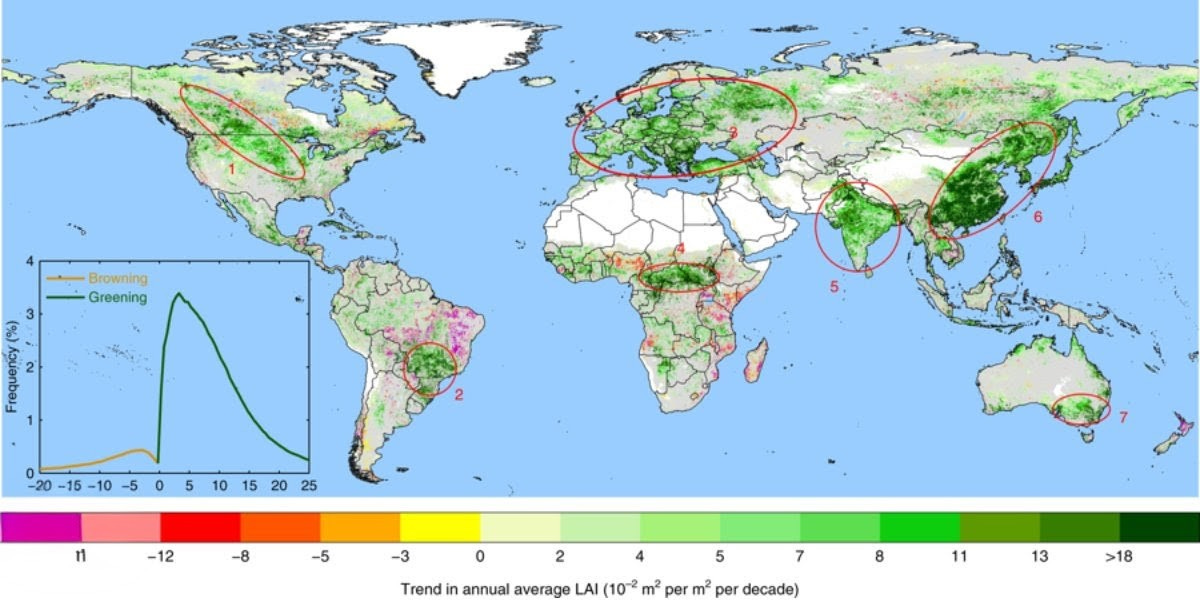
The scientists who know her real purpose call her the Life Molecule. She is the reason our planet is green and abundant. And she’s been turning us even greener since 1984, according to a bunch of glistening boxes in orbit.
Satellites don’t lie. Politicians and psychopaths do. Corrupt scientists and journalists do. But things orbiting the planet can’t lie, because they have enough distance from all the emotional trauma bullshit that drives deception.
Between 1982 and now, a quarter to half of all vegetated land on Earth got seriously greener.
CO2 in 1982 sat at 341 ppm. Today it’s 425. That’s a 25% increase in the gas of life. In the same window, the planet added new leaf cover equivalent to twice the continental United States. Read that again. Two Americas worth of new green that wasn’t there forty years ago.
Ask your AI companion if it’s true, and it will tell you whatever you wanna hear. But if you wanna hear the truth, it’s that we’re getting greener. And 70% of that green is driven by CO2.
Clap yourself on the back. You exhaled. You’re a contributor, even if you’re a vegan climate activist. Along with all the farting cows and organic life that just did that same thing. Breathing. Fermenting. Exhaling. Panting. Raging.
For the planet, it’s all for the green.
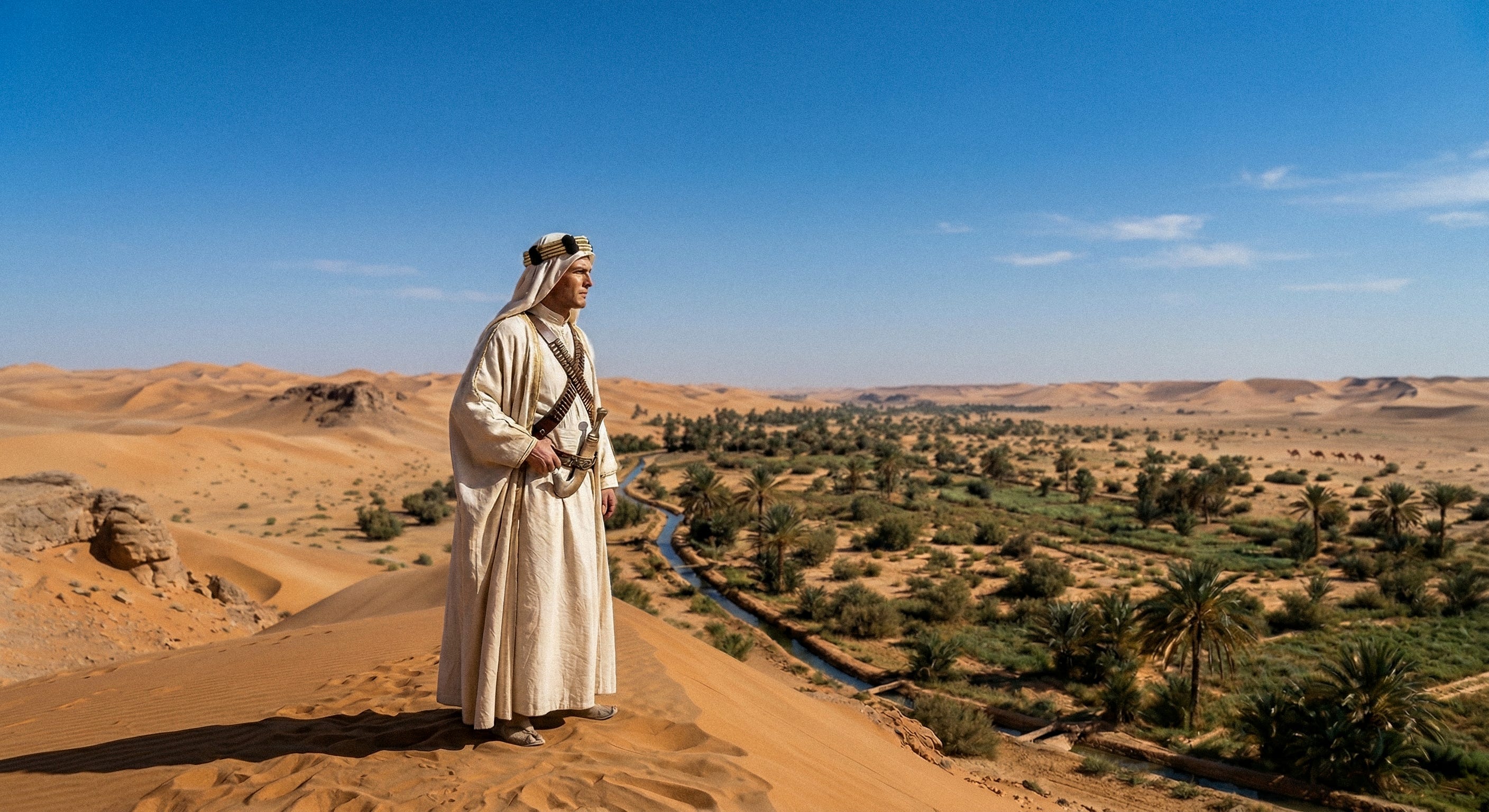
Take the Sahel — the strip of Africa just below the Sahara, the place famine photographers shot National Geographic covers, the home of Live Aid, the brown edge of hell where children emaciated in the 1980s. Greening. Villages that had no shade now have trees. Millet grows where dust blew.
Or the Indian subcontinent. Half a billion people are now farming soil that used to look like dry cement. Since 2000, India’s agricultural leaf area increased over 35%. Not because of Bill Gates or Monsanto — but despite their best efforts to do just the opposite.
Or the Arctic treeline. It’s moving north. Soon you can build a cabin there and tan. Plant some mango. Expand Siberia to where it used to be in the lush days. Grow a garden, baby. Talk to a polar bear. Mix your genes with eskimo.
The planet won. Despite the trillions committed to lowering CO2, the air got richer and the plants responded the way plants do, by growing.
425 ppm is often referred to as the threshold of civilizational panic. What a joke. Just like saturated fat. And sun. And meat. And bacteria. And sex. The guys who made up these stories have only ever been interested in wiping out all traces of life on Earth — well, except their own. That makes them not particularly smart. Where are they going to fit all the grey-faced goons from Geneva and Davos when the planet ceases to be green?
Good news. The psychos are losing. The planet is still greening, despite all the two-to-three-letter acronyms trying to stop it. WHO. UN. WEF. EPA. Your government. Your high school teacher. Your scientific expert. The neighborhood genius who relies on Wikipedia.
They lost the thread. We forgive them. They’ve probably never been in love. Never kissed someone like they mean it. Never laughed enough to green a plant.
500 million years ago, when life exploded out of the oceans and crawled onto land for the first time, CO2 sat at 4,000 ppm. Ten times what we have now. The planet was a wall-to-wall, pole-to-pole jungle. Devonian forests merging with Carboniferous swamps. Cretaceous ferns the size of buildings, creatures so large they made elephants look like chihuahuas — all running on CO2 concentrations our experts today would call apocalyptic.
Four thousand ppm. The most biodiverse period in the history of complex life on Earth. We gorged on the gas and multiplied and propagated and screamed out to ancient gods — with CO2.
So do it again. Close your eyes. Inhale through your nose. Hold for a bit. Feel your cells extract the oxygen, strip the glucose to water, energy, and CO2. Exhale it like a a planetary gift. Contract your diaphragm like it’s your last one. Give the planet another tiny nudge of green.
And if you want to invest in the long game, an even greener planet, make more babies — little CO2-exhaling gangsters who’ll run for 80 years feeding forests, exhaling life, composting and propagating more of the same, asking WTF is their purpose when their hormones hit home.
Tell them.
You came here to exhale, baby. To make as much CO2 as you possibly can. And don’t let anyone tell you otherwise, ever again.
LATEST STUDIES
Zhu et al. (2016) — “Greening of the Earth and its Drivers” Nature Climate Change | Link
Between 1982 and 2009, satellite leaf area data showed that 25–50% of Earth’s vegetated land underwent significant greening, with CO₂ fertilization identified as the dominant driver, accounting for approximately 70% of the observed increase in global plant cover. nature
NASA Science — “CO₂ Is Making Earth Greener—For Now” (2016) NASA Science | Link
Rising atmospheric CO₂ has driven a surge in global vegetation equivalent in leaf area to two times the continental United States over 35 years, though scientists caution the fertilization effect may diminish as plants acclimatize to elevated CO₂ concentrations. nasa
NASA Earth Observatory — “Global Green Up Slows Warming” (2020) NASA Earth Observatory | Link
A review of over 250 published studies concluded that the global surge in plant growth since the early 1980s may have reduced global warming by as much as 0.2–0.25°C through evapotranspiration and carbon absorption — meaning the planet would be measurably hotter without it. nasa
Winkler et al. (2021) — “Slowdown of the Greening Trend in Natural Vegetation with Further Rise in Atmospheric CO₂” Biogeosciences | Link
Satellite observations from 1982–2017 reveal that Earth’s greening trend in natural vegetation is decelerating and browning clusters are intensifying — particularly over the last two decades — with climate change, not CO₂ fertilization, identified as the dominant driver across most biomes, while most models significantly underestimate the observed browning, especially in tropical rainforests. Copernicus
If you dig this piece, consider buying me a coffee.
Thank you. What a revolutionary concept ... you are not the disease.
Thanks- I tend to think that temperature it mainly regulated by the amount of hydrogen / water vapour- and volcanic underwater eruptions trigger temperature changes. I also tend to think we are told to worry too much about our influence on Gaia. I am not worrying- and keep exhaling - specifically when reading the fear mongering by the usual suspects in the usual media.