


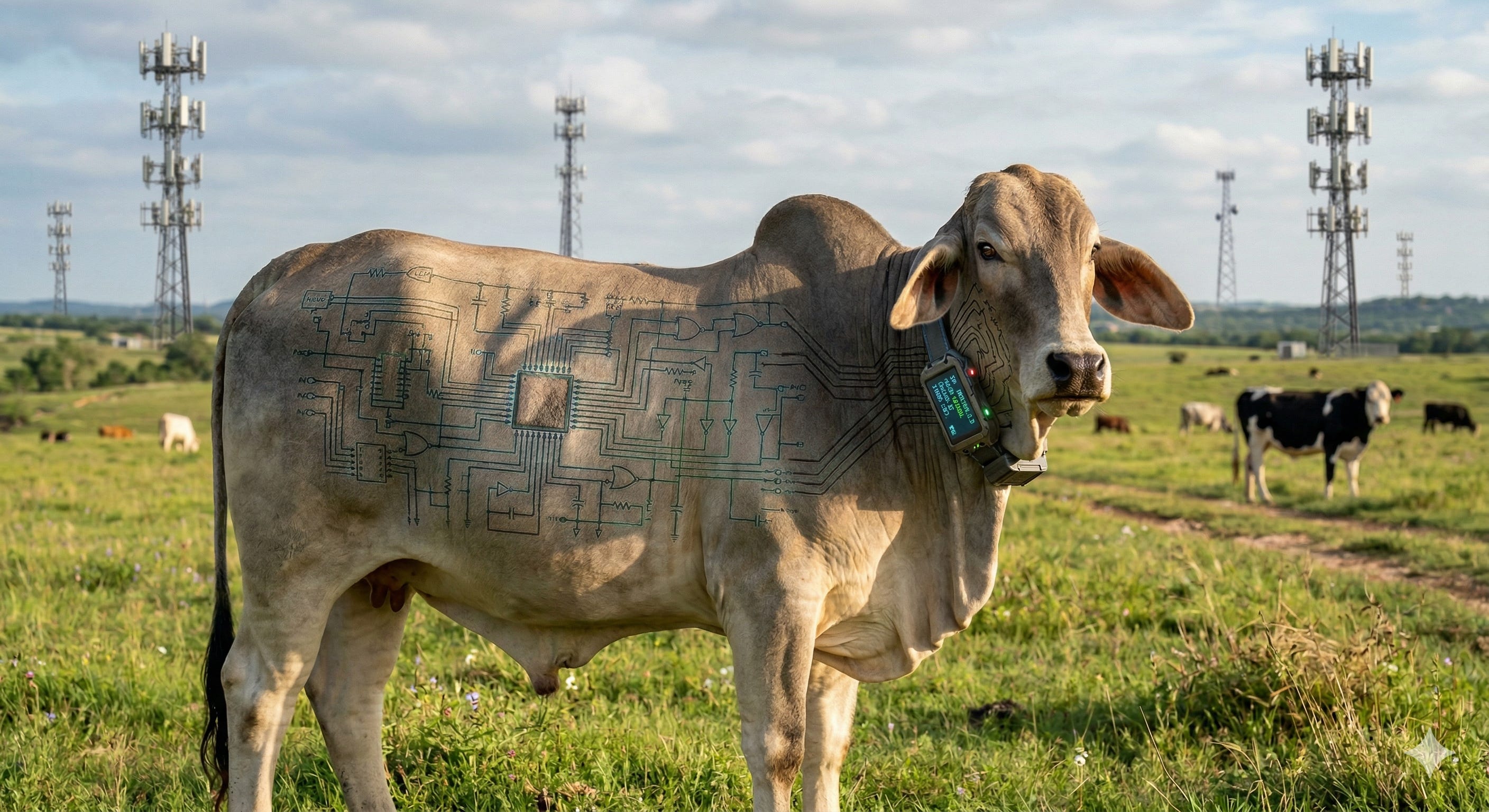
I've always been fascinated by the control mind, the way you're fascinated by a beautiful trap. You can admire the engineering while knowing exactly what it's for. The complete absence of sentimentality about living things. The instinct, when confronted with anything breathing and unpredictable, to immediately ask: what are the inputs, what are the outputs, how do we reduce the noise?
It took me half a century to recognize those tendencies in myself -- otherwise I wouldn’t be able to spot them in the geniuses who engineer our planet.
Think of the Army Corps of Engineers who straightened the Mississippi River in the 1930s, producing the flood conditions that now drown New Orleans every decade. Or the Soviet engineers who decided the Aral Sea was inefficiently placed and diverted its rivers to irrigate cotton, generating one of the great ecological disasters in human history. Or the American scientists in the 1950s who proposed detonating nuclear bombs to redirect rivers and excavate harbors -- Project Plowshare, an actual government program.
Or think of the couple wildly in love until the oxytocin wears off and they discover they’ve been sharing a bed with a stranger, then construct elaborate systems of rules, schedules, financial controls, and emotional checkpoints to manage the chaos. Half of all marriage therapy is two people arguing about whose control system is more justified.
Not only have I been a control freak most of my life -- I’ve also spent quality time with them, worked with them, and dated them passionately. And I’m only now beginning to have a theory about where the drive comes from. Fear. Of course. The fear that the universe will collapse without your input and mess up your brief stay on this planet. That your partners and colleagues and lovers and the rest of humanity will self-implode unless they somehow tap into your unique insights. That if you take your hands off the wheel for one second, shit goes sideways.
Trauma tends to install this firmware early -- something unpredictable and bad happened, and the nervous system drew the only logical conclusion available: control the variables, reduce the uncertainty, so the trauma doesn’t repeat.
Completely understandable response to a difficult childhood. Somewhat more alarming response when the person running it controls the digital infrastructure of two billion people.
Six Hundred Thousand Free Choices
Imagine a cow that doesn’t need a fence, just a piece of technology around its neck. One engineer figured that out, and now six hundred thousand cows already walk themselves to the milking station on command from a phone app -- no dogs, no wire, no sweating farmhand cursing in the rain. Just a beep, a vibration, and if truly necessary, a small electric nudge -- and you’ve got a cow roaming within its perimeter with atomic accuracy. The engineer calls it free choice.
Peter Thiel’s venture firm Founders Fund just led the round that values the cow collar startup called Halter at two billion dollars. The algorithm is trademarked. They call it the Cowgorithm — the most honest corporate trademark in the history of capitalism.
Lucky cow. And a perfect example of the engineering mindset that sees everything as an electronic circuit.
Ferdinand, a cow with an absolutely free will drifts toward the paddock boundary. Left speaker beeps, directional, escalating like a car reversing toward a wall. She keeps going, the collar vibrates -- same haptic pulse as a phone notification. She still crosses, she gets a mild stimulation: 0.18 joules, the precise minimum threshold to produce behavioral correction. The documentation says it plainly -- “any lower and she’ll ignore it.”
Cowgorithm learns cows individually. Her specific resistance. Her particular stubbornness. After one week of training, she responds to sound alone. Six thousand data points per minute -- location, digestion, fertility cycles -- streaming to the cloud via LoRaWAN towers. She grazes freely, no visible fence anywhere, convinced by her own nervous system that the boundary is geography.
She has, the welfare charter says with a straight face, “retained her agency.”
Peter Thiel is one engineer among many, not your villain, just a man who sees circuits everywhere and has been extraordinarily consistent about it his entire career. His other company is Palantir -- named after the seeing stones in Tolkien, the objects that let Sauron watch anyone anywhere, that drove their users gradually mad. Thiel picked the name himself.
Palantir fuses surveillance footage, medical records, financial transactions, location history, social media, and police reports into a single real-time operational picture of a person, a city, a country. It built ICE’s deportation infrastructure. Holds health records on sixty-seven million British citizens through a contract whose contents the UK government keeps heavily redacted. NSA, FBI, US Army, LAPD. Went public September 2020 at fifteen billion dollars.
Then there’s the war business. Shortly after Gaza started burning in October 2023, Palantir signed a strategic partnership with Israel’s Ministry of Defense for what it called war-related missions. CEO Alex Karp flew to Tel Aviv, signed the deal, and later said in what he described as an understatement: ”Our product is used on occasion to kill people.” Palantir’s systems were also implicated in Israel’s September 2024 Lebanon operation -- exploding pagers and radio devices detonated remotely, killing dozens, wounding thousands, condemned by UN experts as a violation of international law. A Palantir representative allegedly told a gathering that intense bombardment of dense urban areas generates excellent training data for AI models studying how humans behave under stress. The more havoc, the better the training.
Gaza as a field test. New Zealand paddocks for the Cowgorithm. Same methodology, different animals, different scale of acceptable losses.
I’m (not) happy for the cows. I suspect the game is bigger. The collar is a side hustle for Thiel. This is not about evil. Just engineering. Just an engineer who can’t stand noisy systems and has found, finally, an unlimited supply of noise to work with.
The Collar You Chose
You already figured the parallel. The thing in your pocket.
The phone is the collar for the mammal that got too clever for a physical one. It carries GPS, accelerometer, gyroscope, magnetometer, two cameras, two microphones, and a WiFi radio that triangulates your position from router signals even when GPS is off. Accelerometer and gyroscope data alone -- no microphone, no GPS, no camera -- can identify whether you’re walking, running, sitting, climbing stairs, or riding in a car with accuracy above ninety-six percent. The phone knows your gait the way a rancher knows which cow has a limp.
Every time you glance at it, thirty thousand invisible infrared dots map your skull in three dimensions. The Attention Aware feature watches whether you’re looking at it and adjusts accordingly. Your phone modifies its behavior based on your attention. You modify your behavior based on what it shows you. Feedback loop. The engineers are proud of it. They should be. It’s elegant.
In January 2025, Apple paid ninety-five million dollars settling a decade of Siri allegedly recording users without consent. Contractors confirmed listening. Drug deals. Medical conversations. Sex. For product improvement. Apple denied wrongdoing while signing the check. This is what one lawsuit managed to surface. What runs beneath is considerably more interesting -- researchers have documented audio processing continuing during supposedly off states, the same neural engine models running even when the thing is supposed to be shut off. The system doesn’t need to hear what you say. It needs to know your behavioral state. That’s enough to predict the next movement. Same principle as the Cowgorithm. Fewer lawyers involved.
Meanwhile the data broker industry -- companies you’ve never heard of -- pulled in two hundred and fifty billion dollars in 2022 harvesting the signal bleeding off your device. The FTC documented one firm alone collecting five hundred million consumer profiles paired with precise location data, including visits to abortion clinics, psychiatric facilities, and churches, selling all of it commercially. In 2023, one group used the open data marketplace to out gay Catholic priests using location data purchased from brokers. The data was supposed to be anonymous. It was never anonymous. Nobody announced this. Announcing it introduces noise into the test.
You say “Portugal” near your phone on a Tuesday and Lisbon hotels are following you by Wednesday. You mention back pain and the lumbar support industrial complex materializes before you’ve sat down. The behavioral model trained on two billion people doesn’t need to hear you say the thing. It already knows. It mapped your psychology years ago and has been running the quiet simulation ever since.
Known circuit. Resistance mapped. Output predictable. Pulse almost never needed, because the training is complete.
Designed with good intentions.
193 Nations, One Sunday, No Fences
The engineering mind isn’t limited to engineers anymore. It’s been installed in our governing institutions.
On September 22nd, 2024, 193 nations ratified Resolution A/RES/79/1 in New York -- the Pact for the Future, bundled with the Global Digital Compact, publicly available at un.org. Read it yourself. What you’ll find is the same engineering worldview, same circuit logic, enshrined as international law and dressed in the language of human flourishing.
Universal digital identity, globally interoperable: one node address per body, following it across every border, every transaction, every checkpoint. Not because anyone is evil. Because gaps in the dataset are friction, friction is waste, and the methodology exists to eliminate waste. A model with holes bothers the engineer at three in the morning the way a dripping faucet bothers a plumber.
An AI framework governing information -- identifying and correcting “mis-, dis-, and malinformation”, three categories elastic enough to expand without reopening the resolution. Sound, vibration, pulse, at the information level. Cross a boundary, hear a beep, correct your direction.
Harmonized data governance across all member states. Universal connectivity by 2030. Every node enrolled. No one left behind, which in circuit terms means no gap in the dataset, no animal without a collar, no component running on its own frequency outside the model.
Russia, Iran, North Korea objected. The objection failed. They weren’t objecting to the methodology. They were objecting to who would be standing at the controls. They had a point. The planetary engineers got free rein.
The Circuit Revealed in the Photocopier
There is even a blueprint for all this. In 1986, a Boeing employee bought a surplus IBM copier from McChord Air Force Base, Washington State, and found a document jammed inside. Dated May 1979. Claiming origin from 1954 -- attributed to the first gathering of the Bilderberg Group, which is real, meets annually, assembles heads of state and central bankers and defense ministers and media executives in a hotel, closes the doors, admits no press, publishes no minutes.
The document was called “Silent Weapons for Quiet Wars.”
The conspiracy crowd says it’s genuine Bilderberg doctrine. That in 1954 at the Hotel de Bilderberg in Oosterbeek, Netherlands, the most powerful men in the Western world adopted this as operational policy. William Cooper, a former Navy Intelligence briefer shot dead on his doorstep in November 2001 during an arrest warrant service, swore he read the classified version himself.
The debunkers say Hartford Van Dyke wrote it -- a self-described systems theorist, libertarian autodidact, and man of apparently limitless conviction who spent years studying operations research, cybernetics, and the mechanics of economic control before deciding the public needed to know what he’d figured out. His method of distribution was to dress the warning as a leaked document, because warnings get ignored and leaked documents get forwarded. It worked. The document spread for decades through exactly the channels he’d predicted. Van Dyke later served federal prison time for counterfeiting three million dollars in currency bearing a photograph of the Queen of England -- a separate project, presumably -- and from his cell called the document “a timeless eternal message to human civilization.” The Queen was unavailable for comment.
Does it matter?
If the Bilderberg Group wrote it, the most powerful engineering minds of the postwar West looked at civilization and saw a circuit, and have been optimizing it ever since in hotels with no press and no minutes.
If Van Dyke assembled it as a warning, a man with sufficient understanding of cybernetics and behavioral economics looked at where the engineering mindset was heading and wrote a document so accurate it now reads as a technical manual for systems that actually exist.
Both explanations arrive at the same address. The document describes the methodology. The argument about who wrote it is exactly the kind of distraction the document itself recommends keeping the public focused on.
Argue about the photocopier. Meanwhile the Cowgorithm runs everything.
The Human Activity CoEfficient
The document opens: ”This manual is in itself an analog declaration of intent. Such a writing must be secured from public scrutiny. Otherwise, it might be recognized as a technically formal declaration of domestic war.”
Then it gets specific.
A national economy consists of simultaneous flows of production, distribution, consumption, and investment. Assign numerical values to all elements including labor and human functions and this flow can be represented by current flowing in an electronic circuit, with behavior that can be predicted and manipulated with useful precision.
The three passive components of electronics map onto the three passive components of economics. Economic capacitance: the storage of capital. Economic conductance: the production of goods. Economic inductance: the inertia of economic value in motion -- the human activity coefficient.
Your savings account is a capacitor. Your job is a resistor. Your habits, your mortgage, your expected standard of living, your deep animal reluctance to lose what you have -- that’s the inductor. When the flow of money diminishes, the human population field collapses to war to maintain the current.
This is where control gets a capital C. War is a circuit correction. Genocide is load balancing. The document says this without drama, the way you’d explain Ohm’s Law to a first-year student.
It also describes shock testing -- the method to calibrate the circuit. You apply a sudden disruption to the population circuit -- a shortage, a panic, a declared emergency — say a Strait of Hormuz shutdown—and watch where the energy moves. Which nodes absorb the shock. Which generate noise. You map the resistance under stress, because stress is when the true topology becomes visible. Then you run the quiet system.
”Experience has proven,” it says, ”that the simplest method of securing a silent weapon and gaining control of the public is to keep the public undisciplined and ignorant of basic system principles on the one hand, while keeping them confused, disorganized, and distracted with matters of no real importance on the other.”
Evil? No. Efficient. How else would engineers safeguard our future?
Operations Research, it explains, was developed during World War II to optimize military strategy. By the early 1950s, the Rockefeller Foundation and US Air Force were funding research into social engineering techniques. The quiet war machine was operational by the late 1950s. It was felt that with sufficient data, predicting and controlling the trend of an economy would be nearly as easy as predicting the trajectory of a projectile.
Which has proven to be the case.
In 2020, every government on earth simultaneously ran the largest behavioral compliance test in history—logging exactly how every demographic responded to every level of restriction, what messages moved which populations, where compliance pooled and where resistance emerged. The dataset is one of the largest ever assembled. Nobody announced the secondary purpose. Announcing it would introduce noise into the test.
The Cowgorithm improves with every moo.
Moo.
It’s only 2026. There’s still a free cow somewhere with no towers, no collar. She doesn’t know she’s free. She’s just doing cow stuff -- drifting across pastures, soaking up sun, drinking from the river, looking for a mate, completely unafraid of the unpredictable, sensing her place in nature without needing to control any of it.
Now that’s a happy cow.
Thank You.