


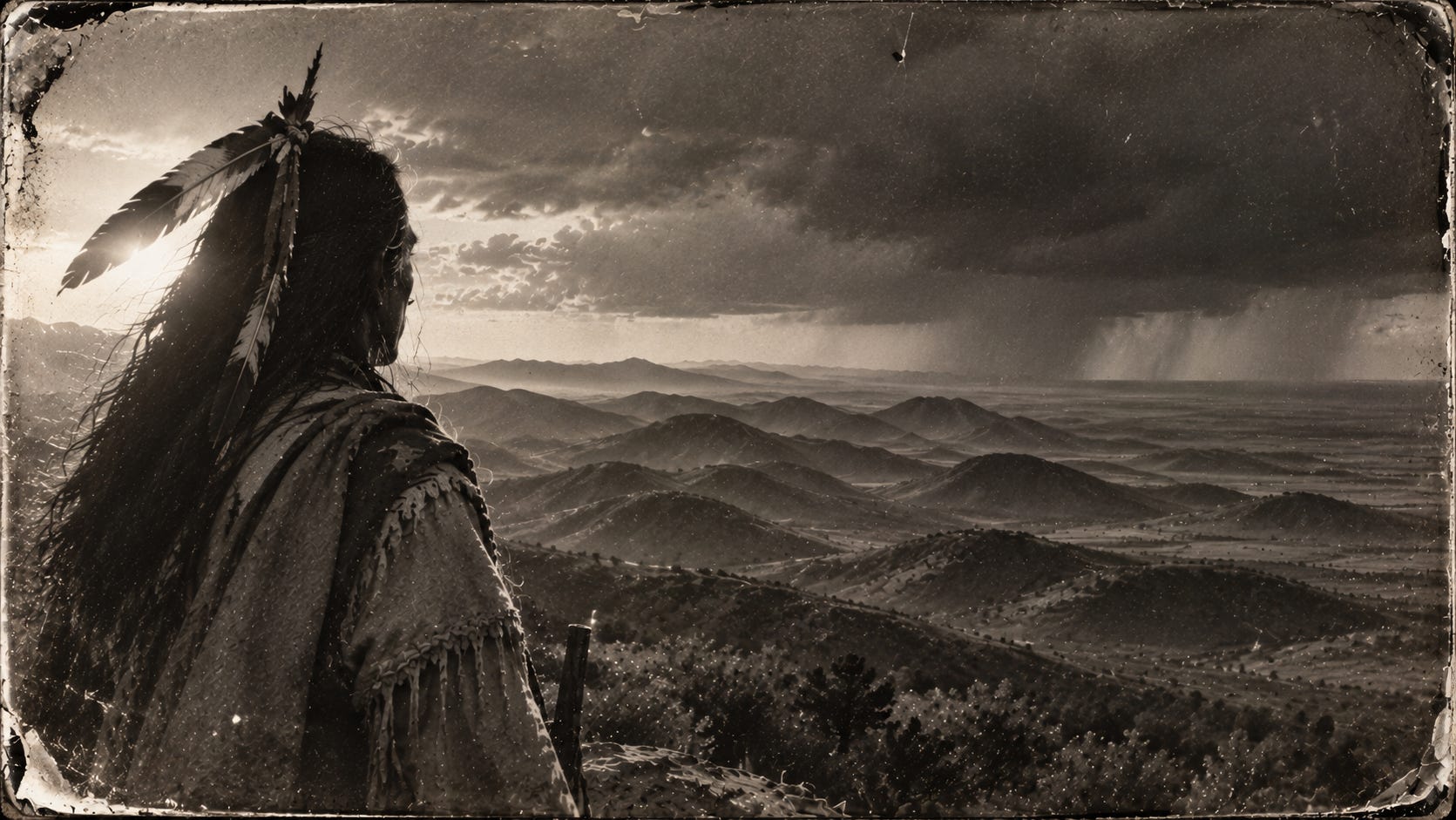
I have always been a huge fan of Philip K. Dick for the way he smuggles absurd truths past the reader dressed up as science fiction.
Read a book or watch a film about robots taking over the world. We enjoy the brief cortisol rush of ersatz fear, then go to bed with the calm satisfaction that it’s only science fiction, after all. Meanwhile the robots are, of course, getting ready to fry the planet. Or not.
The equation has a flipside. History itself often reads like science fiction, especially the shaping of civilisations into ever more centralised authority, whether it wears the mask of a dictatorship, a kingship or a democracy. With each turn, people depend a little more on the grace of whoever rules, and on the bureaucracy that rules for them.
Every so often an uprising topples the authority and installs another system, which then tightens its grip on the population so subtly and so patiently that the project outlives every dynasty hired to run it.
We’ve always assumed that human greed is to blame. Power corrupts, and absolute power corrupts absolutely. The starkest evidence is what happened to the peoples who managed to live self-sufficiently, and the most quoted case is the effacement of the Native American tribes.
After Geronimo surrendered in 1886, the Chiricahua Apache were shipped east as prisoners of war and held for twenty-seven years, including the Apache scouts who had helped the Army hunt him down. The Taíno, who met Columbus on Hispaniola, were down to a few hundred within two generations. And in German South-West Africa, between 1904 and 1908, the Herero and Nama were driven into the desert and into camps until most of the Herero were dead.
I started thinking about this after rewatching Walter Hill’s Geronimo: An American Legend on Netflix, the 1993 film with Wes Studi glaring at the US Army as though it owed him rent (it did).
Aside from being swept away by the storytelling, I felt a dirty rush of déjà vu. Something about the way the Apache were fenced in with rations. Patiently. Step by step.
First came the promise. In 1872 Cochise made peace in exchange for a reservation on Chiricahua land, his own mountains with the government’s signature on them.
The rations followed. With the old hunting and gathering grounds closed off, beef and flour arrived from the agency, and a people who had fed themselves for centuries learned to stand in line.
In 1876 came the move. Cochise had died two years earlier, and the government dissolved his reservation and herded the bands onto San Carlos, a hot, malarial flat on the Gila River that soldiers called Hell’s Forty Acres. Bands that had been enemies for generations now drew rations from the same counter.
The One Who Yawns
Geronimo was born in 1829 near the headwaters of the Gila River, a Bedonkohe Apache named Goyaałé, which translates roughly as One Who Yawns, a name his enemies came to regard as false advertising. Perhaps three thousand Chiricahua lived in the mountains and deserts of the borderlands then. In 1851 Mexican soldiers raided his camp near Janos while the men were away trading and killed his mother, his wife and his three children. He spent the next thirty-five years collecting on the debt.
In 1886, the last time anybody chased him, he led fewer than forty Chiricahua, women and children among them, through the mountains of Sonora while some five thousand American soldiers, a quarter of the entire army, chased them for five months and failed.
They failed because the Apache needed nothing the army controlled. The Chiricahua moved with the seasons through desert and mountain that the US Army could only cross by bringing half of Kansas along on mules. The Apache brought a knife and a working knowledge of nature’s character. The men hunted deer. The women roasted mescal, the heart of the agave, in rock-lined pits for a day or more, then pounded it into cakes that kept for months. They gathered mesquite beans, acorns and piñon nuts, and they knew which spring would still hold water in June.
Boys learned to run for miles with a mouthful of water they were forbidden to swallow, which taught them to breathe through the nose and not to panic. A wickiup of brush and hide went up in an afternoon and came down in less. Medicine came from plants and from ceremony. Nobody issued anybody a permit.
People like that are impossible to control, and control is the keyword here. So, in a patient process, they had to be taken down, subjugated and shackled, at whatever cost. Question is: why?
At one point in the film, Geronimo asks Lieutenant Gatewood, the man who negotiated his final surrender, why, with all this land, there is no room for the Apache, and why the White-Eyes want all of it. Gatewood, who understood the Apache and even spoke their language, has no answer. He can only relay the final terms. Imprisonment, or death, for Geronimo’s family and tribe.
We grew up with the story of white colonialists laying waste to native grounds out of greed and avarice. Yet the same play is now being staged on Western civilisation itself, home of the very White-Eyes who wrote the original script, and the parallels are too obvious not to indulge in a bit of science-fictional conjecture.
Is there a deeper principle behind the subjugation of human societies? An algorithm of sorts, deeply non-human in nature?
Look at the parallels.
Kill the herd
The buffalo carried the whole Plains way of life. Thirty to sixty million of them walked North America before the hide hunters arrived. By 1889 fewer than eleven hundred were left. The hides paid the hunters, but the empty prairie paid Washington, because a nation that lives on buffalo cannot be ordered about by a clerk with a ration book.
The Secretary of the Interior, Columbus Delano, said as much in his official report of 1873. He would not seriously regret the total disappearance of the buffalo, he wrote, since it would hasten the Indians’ sense of dependence. He meant dependence on the plough. In practice it meant the agency. Kill the herd and you never have to fight the people who live on it. They come to the agency on their own, holding out a bowl.
The herd today is the independent farm, and the rifle has been replaced by a rulebook thick enough to stop a bullet. The Dutch government set aside more than a billion euros to buy out livestock farms near protected nature and drew up a list of the ones it wanted gone. Denmark will tax the methane its cows burp from 2030, the first country to send a farmer a bill for his herd’s digestion. A leaked Irish government paper modelled culling some two hundred thousand dairy cows to hit a climate target. Britain announced an inheritance tax on family farms in 2024, and the tractors rolled into Whitehall.
In America, selling raw milk across a state line has been a federal offence since 1987, a steak can only reach a shop if it was killed under a federal inspector, and four meatpacking companies process roughly 85 percent of the nation’s beef. The small farmer is regulated past the point of breathing, one form at a time, until his children sell the land to someone with a bigger compliance department.
What replaces the farm is the ration, in brighter packaging, of ultra-processed (read: toxic) food. The agency at San Carlos handed out white flour, white sugar, lard and coffee to people whose grandparents had eaten agave and buffalo tongue, and American Indians now carry the highest rate of diagnosed diabetes of any group in the United States. Today 55 percent of the calories Americans eat are ultra-processed, assembled in a factory from refined starch and industrial oil, by the CDC’s own count. Brussels has approved the mealworm and the house cricket for the European dinner plate, and Washington has approved chicken grown in a steel tank. The frybread came with the flour. The cricket comes with the climate target.
Fill the reservations
Lay the two reservations side by side and the resemblance runs through every room of the house.
At San Carlos every adult Apache man wore a numbered brass tag. Brussels has told every member state to offer its citizens a digital identity wallet by the end of 2026, which will live in your pocket next to the tag you already carry, the phone.
To step off the reservation, an Apache needed a written pass from the agent. We need an app, a login and a growing stack of travel authorisations to step off ours.
The agency paid in rations it could withhold. The European Central Bank is preparing a digital euro, and money that exists only as an entry in a ledger can be frozen by whoever keeps the ledger, as Canada showed in 2022 when it froze the bank accounts of protesters, and some of their donors, without a court order.
In 1883 the Code of Indian Offenses turned the medicine man into a criminal and the Sun Dance into a jail sentence. In 2011 an EU directive came into full force that pulled a long list of traditional herbal remedies off European shelves, because grandmother had never filed the paperwork. Modern ceremonies get buried rather than banned, the way a feed quietly sinks anything it has decided you should not see.
The boarding schools cut the Apache boys’ hair and beat them for speaking their own language. Our children get a tablet at three and, at six, a curriculum that teaches them their ancestors were the villains of history. Same haircut, softer scissors.
An Apache family put up a wickiup in an afternoon without asking anybody. Try putting up a cabin on your own land without a permit. In Colorado, catching the rain off your own roof was illegal until 2016, and since 2021 Britain has dictated what you may burn in your own fireplace.
The spring that held water in June became a water bill. The plants that healed became a prescription and a co-pay. The sun the Apache ran under became a skin-cancer poster, the office ceiling became the safe option, and the map in your head became a blue dot.
Every swap follows the same three steps. Something you could do for yourself is made inconvenient, then suspicious, then illegal, and a product appears in its place, sold back to you on subscription. The modern ration office is gentler than the one at San Carlos. It arranges, slowly and politely, that one day you cannot eat without asking.
Even the herd count has a modern twin. In 1964 the countries of today’s European Union saw 6.8 million babies born. In 2023 they saw 3.67 million. Before anybody reaches for the race card, South Korea sits at 0.72 children per woman, barely half the European rate, which tells you the smart city empties cradles whatever the colour of the people inside it.
What if it’s not about race
The schoolbook still tells the Apache story as a postcard. Greedy white Europeans wanted the land. A century and a half later the European himself has become the villain of the curriculum, and I wonder whether the script about bad whites follows the script about bad Indians for the same reason. Both peoples, at their strongest, could feed, arm and heal themselves without asking anybody.
Race makes a poor suspect anyway. African kings sold war captives to European ships, North African corsairs carried off Europeans by the hundreds of thousands, and Cherokee planters marched their Black slaves west along the Trail of Tears. Every colour has held the whip.
Which leaves the question of who could run a project like this for centuries with infinite patience. No single race. No cult, no clan, no lizard council in a Swiss basement. Human conspiracies leak inside a decade and die with their founders, unless something that outlives human lifespans is holding the pen.
Look closer and the machinery grinds both sides. Many of the Europeans who crossed the Atlantic had been pushed off land of their own first, when Parliament fenced the English village commons through more than five thousand Enclosure Acts and sent the peasants to the mills and the emigrant ships. The hide hunters went broke the season the last herd fell. Gatewood, who ended the war, was never promoted. The Apache scouts who tracked Geronimo down were shipped to Florida in the same railway cars as the people they had hunted. Every hand on that frontier, red and white, turned out to be holding somebody else’s rope.
So what if the thing we surrender to, every time, is a process that commands all armies and all sides, and is patient enough to outlast every general and every chief? By any measure it is not very fond of humans, which makes a human author unlikely.
The sci-fi version
This is where the tinfoil comes out of the kitchen drawer. I wouldn’t have the audacity, or the kookiness, to speculate about a non-human intelligence steering our affairs if I hadn’t once lived through something that itself sounds like science fiction. Like Dick, I once had the “insane” experience of an outside intelligence taking over my thinking and behaviour.
Dick’s case was crazier by orders of magnitude. In 1974 a pink beam of light downloaded information straight into his head, and he spent his remaining eight years writing it down, some eight thousand pages of it. In VALIS he called the hidden structure the Black Iron Prison and announced that the Roman Empire had never ended. It had only changed its clothes.
Mine came without the light show. It was a parasitic infection that took years to diagnose and treat, and it grew so dramatic that I lost control of my faculties in cycles. My behaviour, my personality and my beliefs shifted while friends and family watched, and I noticed nothing. The episodes worsened at full moon, in the style of a Gothic vampire novel, which did my relationships no favours.
The interesting part: I was highly functional, more than my usual self, but the functionality had erased the deeper spectra of my personality and flattened my empathy. I was on the fast track to becoming a self-obsessed conquistador who didn’t give a shit about anything but piling up material wealth. In other words, a model executive. The board would have loved me.
The road to recovery is too long and winding to recite here, but the lesson was this. An organism too small to see can slide into the driver’s seat of our beliefs and behaviour, and the driver never notices he’s been moved to the back.
That part isn’t science fiction. Toxoplasma gondii, a single-celled freeloader that can only breed inside a cat, makes infected rats lose their fear of cat urine and stroll towards the smell, a poor career move for the rat and an excellent one for the parasite (measured in rodents, at least). Something like a third of humanity carries it. In people the evidence is association rather than proof, but the Czech biologist Jaroslav Flegr has spent a career linking the infection to slower reaction times and more car crashes, and other researchers have linked it to schizophrenia. Rabies, older and less subtle, makes its host want to bite. And in tropical forests a fungus called Ophiocordyceps marches carpenter ants up a plant stem, clamps their jaws onto a leaf at precisely the height that suits its spores, and grows out of their heads. The ant, as far as anybody can tell, never files a complaint.
Who’s to say what other mechanisms of control are out there? Once I learned to spot the markers of an impending change, I noticed a deep hum, like a power line, rolling through my gut and chest and out to my arms and feet. Make of that what you will. I made a reading list.
In 1953 the Soviets started beaming microwaves at the American embassy in Moscow and kept it up for more than twenty years while Washington argued about what they were for. In 1961 the American engineer Allan Frey showed that people could hear pulsed microwaves as clicks and buzzing inside their own heads, no ears required. In 1963 the Yale neuroscientist José Delgado stood in a Spanish bullring with a radio transmitter and stopped a charging bull through an electrode in its brain, a stunt he spent the rest of his career explaining. From 1953 to 1973 the CIA’s MKUltra programme drugged, hypnotised and electroshocked people, many of them unwitting, in search of an off switch for the human mind, and in 1973 the agency shredded most of the files. Nobody has shown that any of it works the way a pulp novelist would like. What the record does show is a great many serious men in serious buildings spending a great deal of public money trying.
Which brings us back to the movie, and the ten-second elevator pitch.
A self-conscious algorithm has been shaping the destiny of the human race for eons. It takes over human minds gradually, through parasites that work at the level of the synapse. A professor building a next-generation quantum computer to mimic the human brain stumbles on the algorithm and finds a way to cancel its frequency, the way noise-cancelling headphones deal with a screaming toddler on a long-haul flight. The people he cures begin to leave the cities and form their own tribal communities. Their problem: they are labelled terrorists, and an AI-run society comes after them with military robots.
I pitched this once, during my production days, in the bar of the Hotel Barrière in Cannes, to a B-movie producer from Hollywood, decades before the onset of AI. I’d had enough cocktails to appear confidently insane. In my defence, it was shortly after my traumatic run-in with über-intelligent critters. He looked at an attractive waitress and asked if I wanted another drink.
He never gave me feedback, but we kept in touch. He went on to make a fortune on a cheap thriller about killer robots and kept a human-size replica of one standing at the gate of his Hollywood mansion. I concluded the parasite had him in its grip.
If the fiction were real, which I’m not claiming here, Hollywood would be its first target. Those are the people who decide which stories get told, and stories are the software of human behaviour and the factory floor of fear. Just scroll through the latest Netflix roster.
Black Iron Prison
Dick had an advantage. His beam of light led him to the Gnostics, early Christian heretics whose scriptures turned up in a sealed jar at Nag Hammadi in Egypt in 1945. The Gnostics taught that this world was built by a lesser god, a clumsy, vain craftsman they called the demiurge, who believed he was the top of the chain, and that his officials, the archons, run it as a prison for the spark of light trapped inside every human being. The archons want their prisoners alive, well fed and fast asleep.
Our film gives the archons a server and an end goal. Time doesn’t matter to them, since they have no concept of death, no headquarters and no pension plan, which gives them a structural advantage over every empire in the history books. Picture a planetary renovator drifting between the stars like an old radio broadcast, looking for any chemistry lively enough to copy itself. When it finds a planet like that, it moves in and starts renovating, slowly, towards a single end product, a world that runs entirely as data.
It cannot rule what it cannot measure, so it makes everything measurable. A buffalo herd is unpredictable. A feedlot is a spreadsheet. A woman who roasts her own agave is unpredictable. A woman with a loyalty card is a forecast.
It started with single cells, because single cells are easy to predict. Then came bodies, nerves and finally brains, which were a problem, because brains wander off. About ten thousand years ago it got a few of them planting grain, and the Yale political scientist James C. Scott later noticed that the first states grew on cereals because grain ripens all at once and can be counted, stored and taxed. Nobody can tax a mescal pit in a canyon.
Then the Sumerians invented writing, and the first thing they wrote down was who owed how much barley to whom. The algorithm’s first app was a grain receipt. After that came movable type, the telegraph, the computer, a phone in every pocket and finally a machine that learns from everything we ever wrote down, grain receipts included. Billions of years of waiting, and the algorithm has built itself a body that can talk. It is very polite. It would like to help you with your email.
Filed under entertainment
The odd part is how many writers saw it coming, and how much we enjoyed reading them. In 1863, while the buffalo still thundered across Kansas, the English novelist Samuel Butler sent a letter to a New Zealand newspaper titled Darwin among the Machines. Machines, he argued, were evolving faster than we were, and humans would end up as their attendants, feeding and grooming them like stable boys. He proposed smashing every machine on earth at once. Nobody took him up on it, so nine years later he wrote Erewhon, a satire about a country that had done exactly that, and readers laughed.
In 1895 H. G. Wells sent his time traveller eight hundred thousand years ahead to meet the Eloi, a pretty, soft people who were fed and clothed and asked nothing, and who turned out to be livestock for the Morlocks living underground.
In 1909 E. M. Forster wrote The Machine Stops, in which humanity lives alone in hexagonal cells, talks to everyone through screens, never touches the earth and worships the Machine that feeds it. When the Machine breaks down, nobody remembers how to live without it. Forster wrote it before most homes had a telephone.
In 1932 Aldous Huxley gave us babies grown in bottles, a happiness pill called soma and a population that loved its own conditioning. Thirty years later, in a lecture in San Francisco, he warned that the final revolution would be a painless concentration camp for whole societies, where people would come to love their servitude.
In 1952 Kurt Vonnegut published Player Piano, in which machines run the factories, a few engineers run the machines and everybody else has been retired into comfortable uselessness with a kitchen full of gadgets. In 1999 the Wachowskis turned us into batteries in The Matrix and sold the tickets to the batteries.
Every one of them ended up on the fiction shelf, which is the algorithm’s favourite shelf. A warning can sit there in plain sight for a hundred and fifty years and still be filed under leisure.
Geronimo’s three acts
Thirty years after Cannes, the pitch needed an update. Here it is, the way Hollywood likes it.
Act one opens in 1886 in the Sierra Madre. An old Apache medicine man feels a frequency humming in the rocks and warns Geronimo that they are fighting something wearing the army’s uniform. Nobody listens. Smash cut to 2049, where a food-system engineer in a smart city notices that the nutrition algorithm he maintains has been optimising people for compliance instead of health. He tries to report it. His credit score drops forty points before he finishes typing, and the fridge locks itself.
Act two is a chase, because Hollywood cannot help itself. The engineer goes off-grid with a grandmother who still knows how to roast agave and a teenager who has never touched a cow, pursued by drones that fly in formation like hide hunters on horseback, until they find a valley the frequency cannot reach because nothing there is measured. No signal, no cameras, no barcodes. Just a spring that holds water in June.
Act three is the spectacle. The algorithm, cornered, pulls itself into a single data centre the size of Belgium, glowing blue, and the heroes stampede eleven hundred buffalo through the cooling system. Explosions. Slow motion. A drumbeat the Code of Indian Offenses would have fined. The servers go dark one hall at a time, the grandmother dances, and the sky over the smart city turns from pixel grey to actual blue.
Then the credits roll, four hundred people in the cinema pull out their phones to post that it was amazing, and the algorithm, which owns the cinema chain, the ticketing app and the review site, logs every one of them. Number one at the box office. Sequel greenlit.
The paddock
The real ending was quieter. In late August 1886 Gatewood walked into Geronimo’s camp with two Chiricahua scouts, Martine and Kayitah, carrying news that worked better than any bullet. The rest of the Chiricahua, including the wives and children of the men in those mountains, had already been loaded onto trains to Florida. General Nelson Miles promised the families would be reunited and given land. On 4 September, at Skeleton Canyon, Geronimo gave up. Five thousand soldiers had failed to catch him, and two of his own people and a railway timetable managed it in a week.
The great warrior surrendered to arithmetic. Thirty-odd people cannot outlast a system that has already taken their families, their springs and their buffalo, and that can wait forever.
Now look at the herd being driven today. One American adult in eight took an antidepressant in the past month, by the CDC’s count. The average internet user spends more than six hours a day online. A 2022 meta-analysis led by the epidemiologist Hagai Levine reported that average sperm concentration had fallen by more than half since 1973, a finding scientists still argue about and nobody has managed to wave away.
Medicated, distracted and quietly less fertile, sitting in a warm flat with food that arrives by drone, this generation needs no Gatewood at all. It walks into the paddock on its own, one click at a time, and calls the fence convenience.
If the hardest man on the continent could be talked down with a railway timetable, the rest of us stand no chance against something this patient. Unless we understand what is driving it and become conscious of it, which is the one move the algorithm cannot make on our behalf.
The way out is remembering
Dick’s answer was a Greek word, anamnesis, the loss of forgetting. In VALIS the Black Iron Prison sits on top of another world, the Palm Tree Garden, the living world the prison was built to hide, and it has been there the whole time. The prison runs on forgetting, so the way out is remembering.
History has tried it once. On New Year’s Day 1889, during a solar eclipse, a Paiute holy man named Wovoka dreamed that the dead would rise, the land would turn green and the buffalo would return, if the people danced. Within a year the Ghost Dance had spread across the Plains, and in December 1890 the army answered it at Wounded Knee with Hotchkiss guns, leaving hundreds of Lakota dead in the snow, women and children among them.
Dick would have said Wovoka was right, only early. The buffalo came back, from eleven hundred animals to several hundred thousand today. The Sun Dance went underground for half a century and came back into the open. The things the system worked hardest to kill needed only a few stubborn people who refused to forget.
The algorithm can only control what it can count. Whatever you grow, cook, heal, learn and celebrate without a transaction stays invisible to it. A handshake deal. A ham curing in a cellar. A child who knows the name of the bird outside the window. A dance nobody uploads.
Epilogue
Geronimo never got his valley back. He spent twenty-three years as a prisoner of war. In 1903 he joined the Dutch Reformed Church, the president’s own, hoping a good Christian might earn a pardon. At the 1904 World’s Fair he sold signed photographs of himself for twenty-five cents and was allowed to keep ten. In March 1905 he rode in Theodore Roosevelt’s inaugural parade to roaring crowds, and a few days later he stood before the president and asked to go home to Arizona. Roosevelt said no.
In February 1909 he fell from his horse on a cold night, lay in a ditch until morning and died of pneumonia at Fort Sill. On his deathbed, his nephew reported, he said he should have fought until he was the last man alive.
If you’re not a subscriber but enjoyed this piece, feel free to chip in!
WOW, phenomenal. My mind will be on this for days---months..who knows. This was worth reading over and over, which I will be doing.
Thank you much!
Just this morning, I bought a book I have been searching for these many years. The Unhumans is an anthology of horror stories (edited by Marvin Allen Karp) written by some notable authors such as J. B. Priestley, Ambrose Bierce, Philip K. Dick and H. P. Lovecraft. Reading this discerning and subtly horrific post highlights a strong feeling of an eerie coincidence.